




Soybean
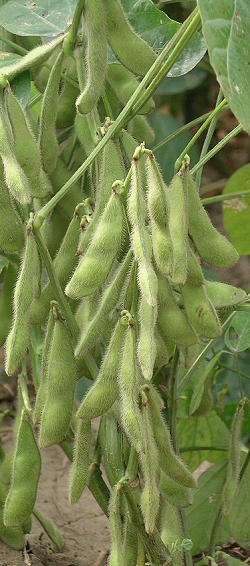
SoybeanIn collaboration with the World Vegetable Research Center, we released soybean Tainan Selection No.1 in 1986 and Tainan Selection No.2 in 1993; both determinate varieties are early-maturing, high-yielding, lodging-resistant, and suitable for mechanical harvest, with Tainan Selection No.2 additionally resistant to downy mildew, rust, and leaf scorch. We released black soybean Tainan No.3 in 1998, and Tainan No.5 in 1999, both large-seeded, yellow-kernel types with high protein content, ideal for oil extraction. We introduced black soybean Tainan No.8 and Tainan No. 9 in 2009; Tainan No. 8 is powdery mildew resistance, and elevated protein and isoflavone levels, making it perfect for sweet-syrup black soybean products and nutraceuticals, while Tainan No.9 is a yellow-kernel black soybean with higher yield and robust disease resistance, well suited to organic cultivation. Soybean Tainan No.10, released in 2013, features yellow seed coat and hilum, high yield, elevated protein content, and powdery mildew resistance, ideal for soymilk and tofu production. In 2017 black soybean Nandares No.11 addressed the small seed size, low yield, and disease susceptibility of Tainan No.3 while further enhancing functional health components. For vegetable soybean, we developed Tainan Selection No.1 in 2003 and Tainan ASVEG No. 2 in 2005. To meet the demand for green manure or cover crops in the vast fallow fields of Yunlin, Chiayi and Tainan, we released soybean green manure varieties Tainan No.4, No.6, and No.7. Tainan No.7, released in 2002, exhibits vigorous early growth, high fresh biomass, tolerance to waterlogging, drought, cold, and superior weed suppression; its extended growth period and complete canopy coverage enable two green manure cycles in fallow fields or under-tree groundcover cultivation in orchards.
|
 |
